Map the system
Start with the chapter that matches the constraint in front of you — agent reliability, context assembly, evaluation, trust boundary, load, or a delivery that has stalled.
The systems library · open access
No beginner glossaries and no “100 prompts” filler. Each one makes a single argument and works it through — the mechanism, the trade-off, the failure mode, and the measurement that tells you whether it held.
Chapters publish as they are written. Every book below shows its full contents, with the chapters that are already readable marked as links.
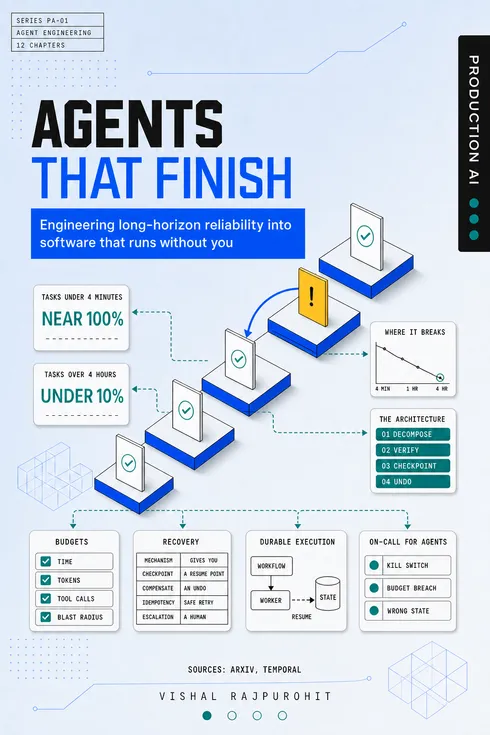
Frontier models are close to perfect on work a skilled person would finish in four minutes and close to useless on work that takes four hours. The gap is not intelligence. It is that most agent architectures cannot notice a wrong intermediate state, let alone roll one back, so the first bad commitment is inherited by every step after it. This book builds outwards from that failure mode: decomposition as a real artifact, verification between steps, checkpoints an agent can resume from, compensating actions for effects that already left the system, and budgets that bound the damage when none of it works.
Read the full book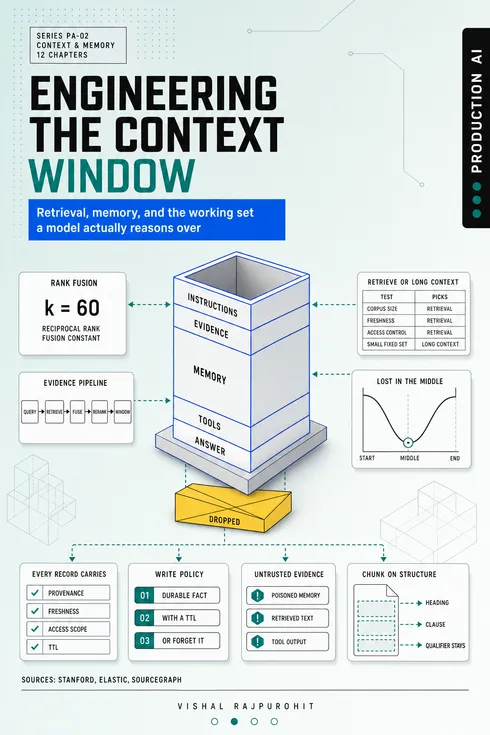
Retrieval, memory, compaction and ordering are usually built by different people at different times, and then the result is judged as though the model were the variable. This book treats them as a single system for deciding what the model sees: an evidence pipeline feeding a budgeted, ordered window, with provenance, freshness and access control surviving all the way into the prompt. It also takes the long-context argument seriously — long windows did kill lazy retrieval — and gives you the tests that show which parts of your own pipeline are now redundant.
Read the full book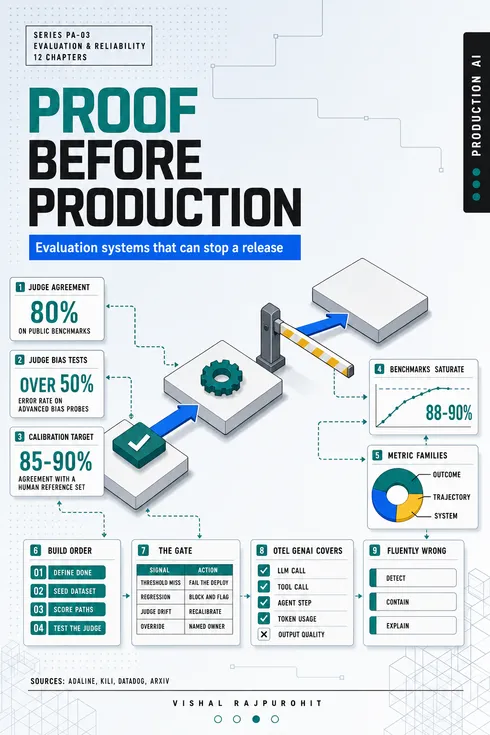
The demo passes because someone chose the inputs. The product fails quietly because production did not. This book builds the apparatus that closes the gap: a definition of done for open-ended output, a first dataset drawn from real traffic, metrics separated into outcome, trajectory and system, a judge calibrated against human annotation that carries its own error bar, and a suite with the authority to fail a deploy. It also draws the line where the OpenTelemetry GenAI conventions stop and your own evaluation data has to start.
Read the full book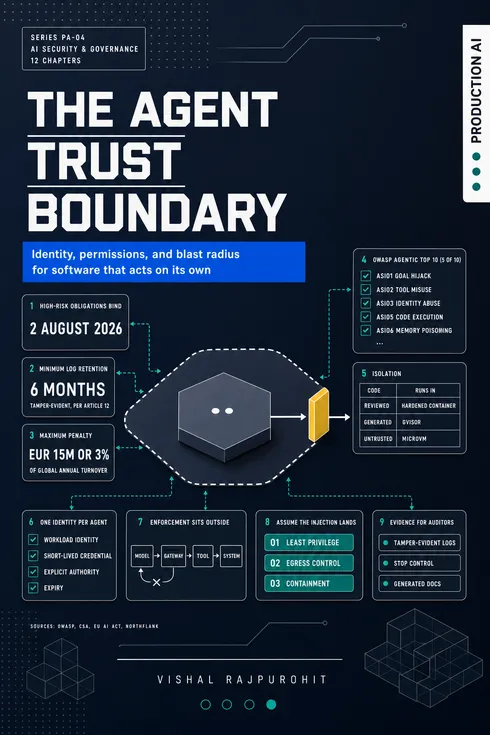
Assume the injection succeeds. That single assumption reorganises the whole problem: security stops being a matter of instruction wording and becomes a question of identity, authority and containment. This book draws the boundary — who the agent is, what it may call, where its code runs, what it may reach, what it may remember — and places enforcement outside the model, at the gateway, the tool or the destination system. It ends with the evidence an auditor asks for, because from 2 August 2026 some teams have to produce it.
Read the full book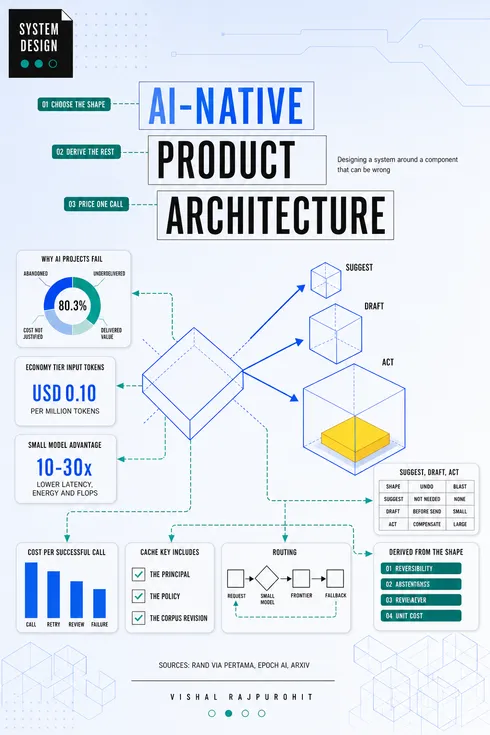
Most AI features fail for reasons that have nothing to do with the model. They fail because nobody decided whether the system suggests, drafts or acts, and so nobody designed the undo, the abstention, the escalation or the cost ceiling that each of those shapes implies. This book makes the interaction shape the first decision and derives the rest from it: reversibility, confidence display, routing, unit economics, latency budgets, caching that cannot serve a wrong answer faster, and the evidence that tells you to cut the feature.
Read the full book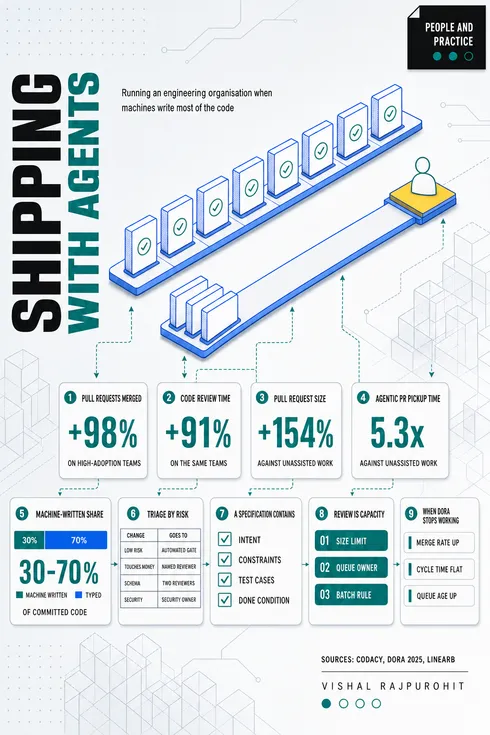
Merge rate goes up, cycle time does not move, and everyone blames the tooling. The tooling is fine; the operating model is not. This book redesigns the functions that authorship used to absorb: what a specification has to contain now, how to triage review by risk, what PR size and queue discipline actually buy, who owns code nobody typed, how tests become the contract with the agent, and which delivery metrics still mean anything once most committed code is machine-written.
Read the full book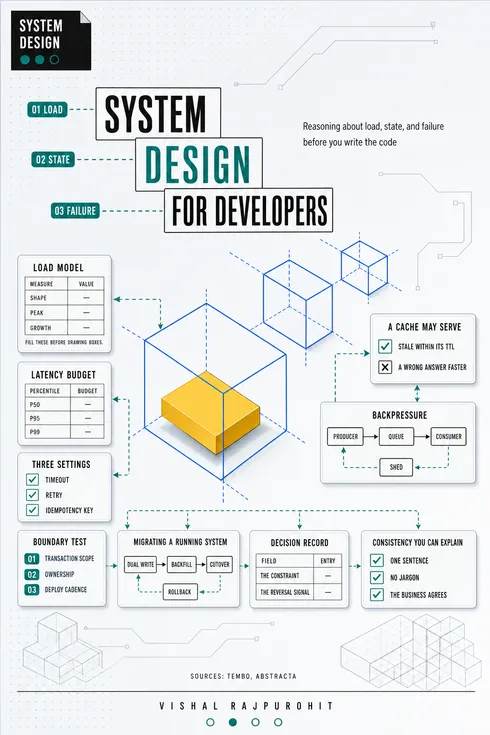
Design is not drawing boxes. It is deciding, in order, what load the system has to absorb, where state lives and what consistency it needs, and how the thing behaves when a dependency is gone — then recording the constraint that forced each answer and the signal that would reverse it. This book works through that order using the decisions that actually cost money later: data model, service boundaries, caching, queues and backpressure, timeouts and idempotency, observability, capacity, and how to migrate a system that cannot stop running.
Read the full book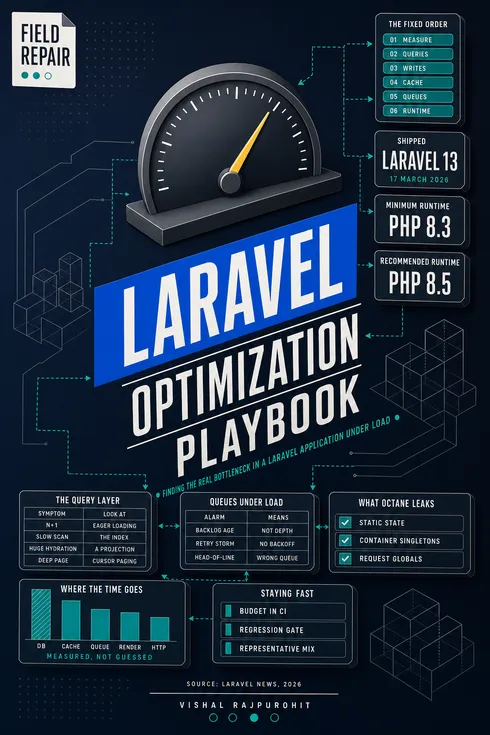
An application that got slower as it got busier does not need a new framework. It needs to be measured, then worked through in a fixed order: the query layer, then write contention, then cache invalidation, then queue saturation, then the runtime. This book runs that order with a measurement at every stage, and ends with the budgets and regression gates that stop the win from decaying the week after you ship it.
Read the full book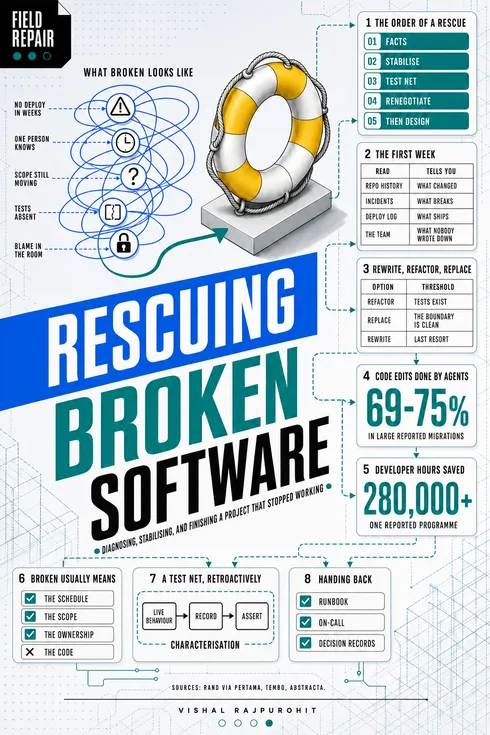
Walking into a stalled delivery, the temptation is to form an opinion in the first hour and rebuild in the first week. Both are mistakes. This book runs the order that works: reconstruct the real state from the repository, the incident record and the deploy history; stabilise before improving; build a characterisation test net around the paths the business depends on; decide rewrite, refactor or replace with a defensible reason; and renegotiate the schedule before touching the architecture. It ends where a rescue should — with a team that can run the thing without you.
Read the full book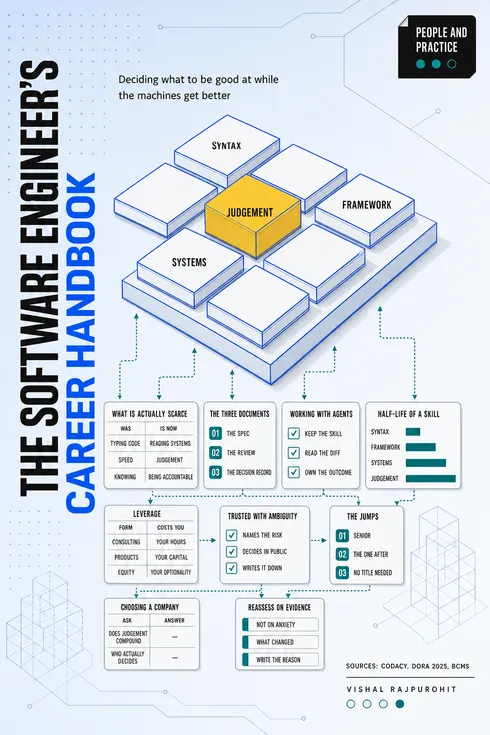
Career advice written against the old ladder tells you to get faster at producing code, which is the part that stopped being scarce. This book is written against the shift instead: what is actually rare now, how to build comprehension and specification as deliberate skills, how to work with agents without losing the ability you would need without them, and how to choose problems, companies and forms of leverage that make judgement compound rather than depreciate.
Read the full bookHow to use the library
Start with the chapter that matches the constraint in front of you — agent reliability, context assembly, evaluation, trust boundary, load, or a delivery that has stalled.
Use each section to identify assumptions and couplings, not to collect isolated techniques.
Adopt the metrics and replay boundaries before applying the optimization to production traffic.
Every meaningful systems change should ship behind a versioned decision and a defined reversal trigger.