Blog, page 2
 Evaluation and Security
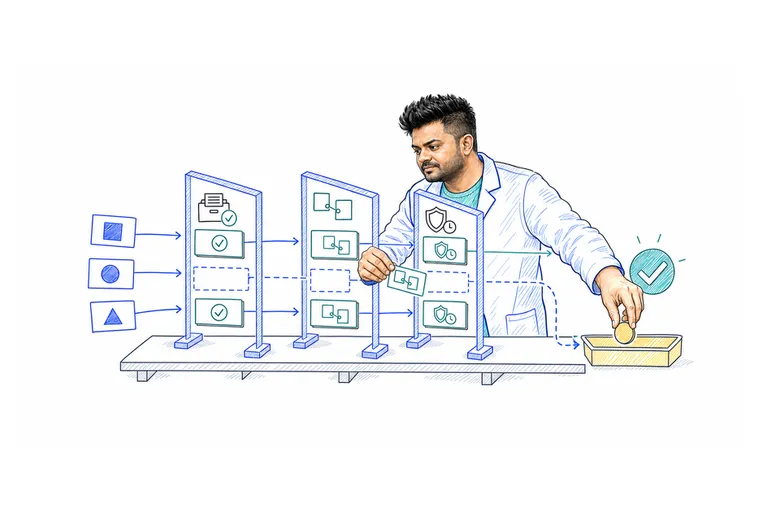
Build an LLM Evaluation Harness That Can Block a Release
From task contracts and test slices to calibrated judges, regression budgets, and production feedback loops.
 Evaluation and Security
Hallucination Controls Belong in the System, Not One Prompt
A layered design for constraining claims, grounding evidence, verifying outputs, and abstaining when the system does not know.
 Evaluation and Security
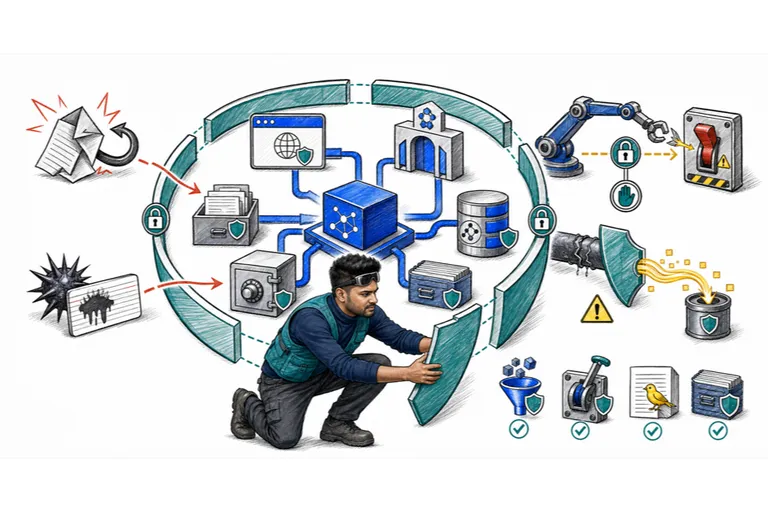
Guardrails as Policy Enforcement, Not Keyword Blocking
Building layered input, action, and output controls that remain testable when language and threats change.
 Evaluation and Security
Threat Modeling an AI Application End to End
Assets, trust boundaries, model-specific attacks, tool abuse, data leakage, and concrete mitigations for deployed AI systems.
 Evaluation and Security
Prompt Injection Defense in Depth
Why delimiters are not a sandbox, how indirect injection reaches agents, and which architectural controls actually reduce impact.
 Retrieval
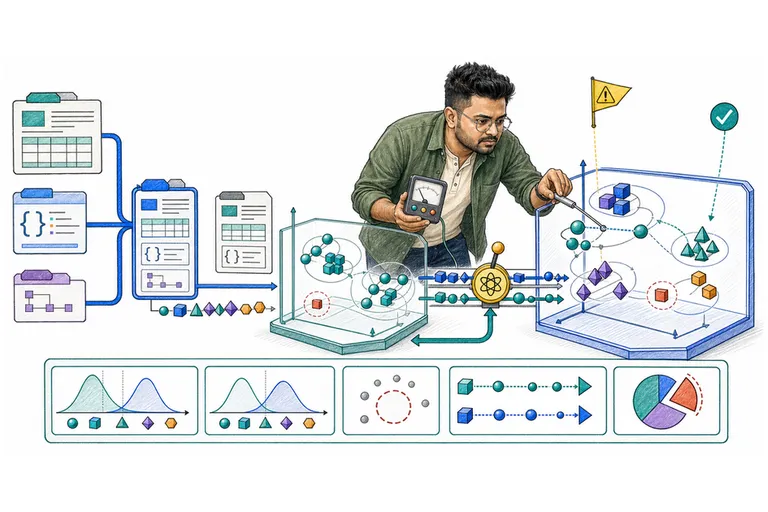
Embedding Systems: Models, Indexes, and Semantic Drift
Selecting representations, constructing embedding inputs, migrating indexes, and detecting when semantic neighborhoods stop serving the product.
 Inference Systems
Fine-Tuning with LoRA: Data, Adapters, and Production Operations
When fine-tuning is justified, how low-rank adapters work, and what it takes to evaluate, serve, and update them safely.
 Multimodal and Edge
Multimodal AI Pipelines for Images, Audio, and Documents
Engineering preprocessing, temporal and spatial grounding, context budgets, validation, and storage around multimodal models.
 Inference Systems
LLM Cost Engineering: From Token Prices to Unit Economics
Modeling full request cost, eliminating waste, forecasting margins, and optimizing without disguising quality regressions.
 Product Architecture
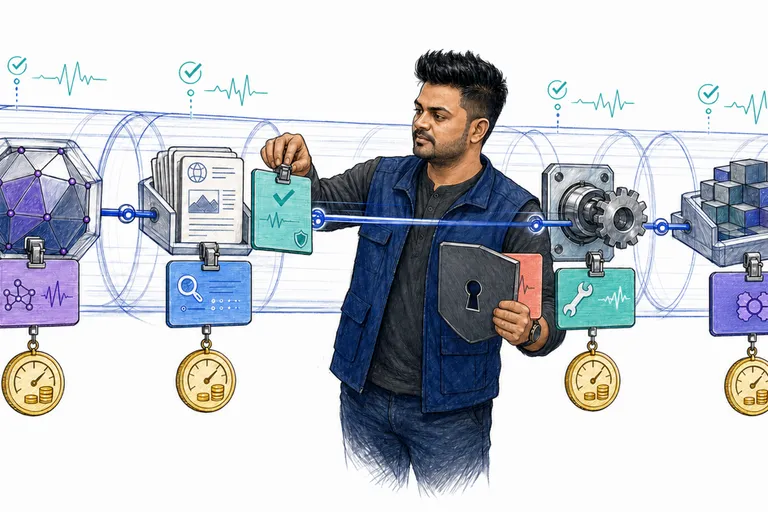
Observability for LLM and Agent Systems
Tracing model calls, retrieval, tools, state transitions, quality signals, and cost without turning telemetry into a privacy liability.
 Product Architecture
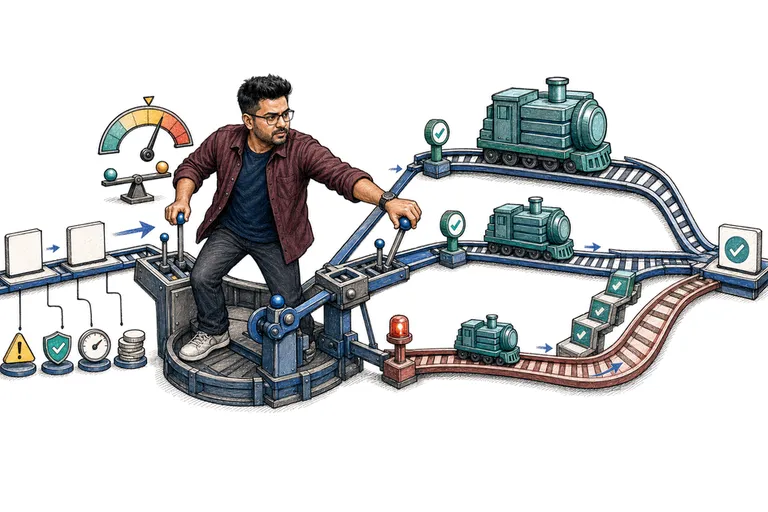
Model Routing, Cascades, and Fallbacks
How to choose models per request using task risk, calibrated confidence, operational health, and total expected cost.
 Product Architecture
Structured Outputs Beyond Valid JSON
Designing schemas, constrained decoding, semantic validators, repairs, and safe evolution for dependable model integrations.